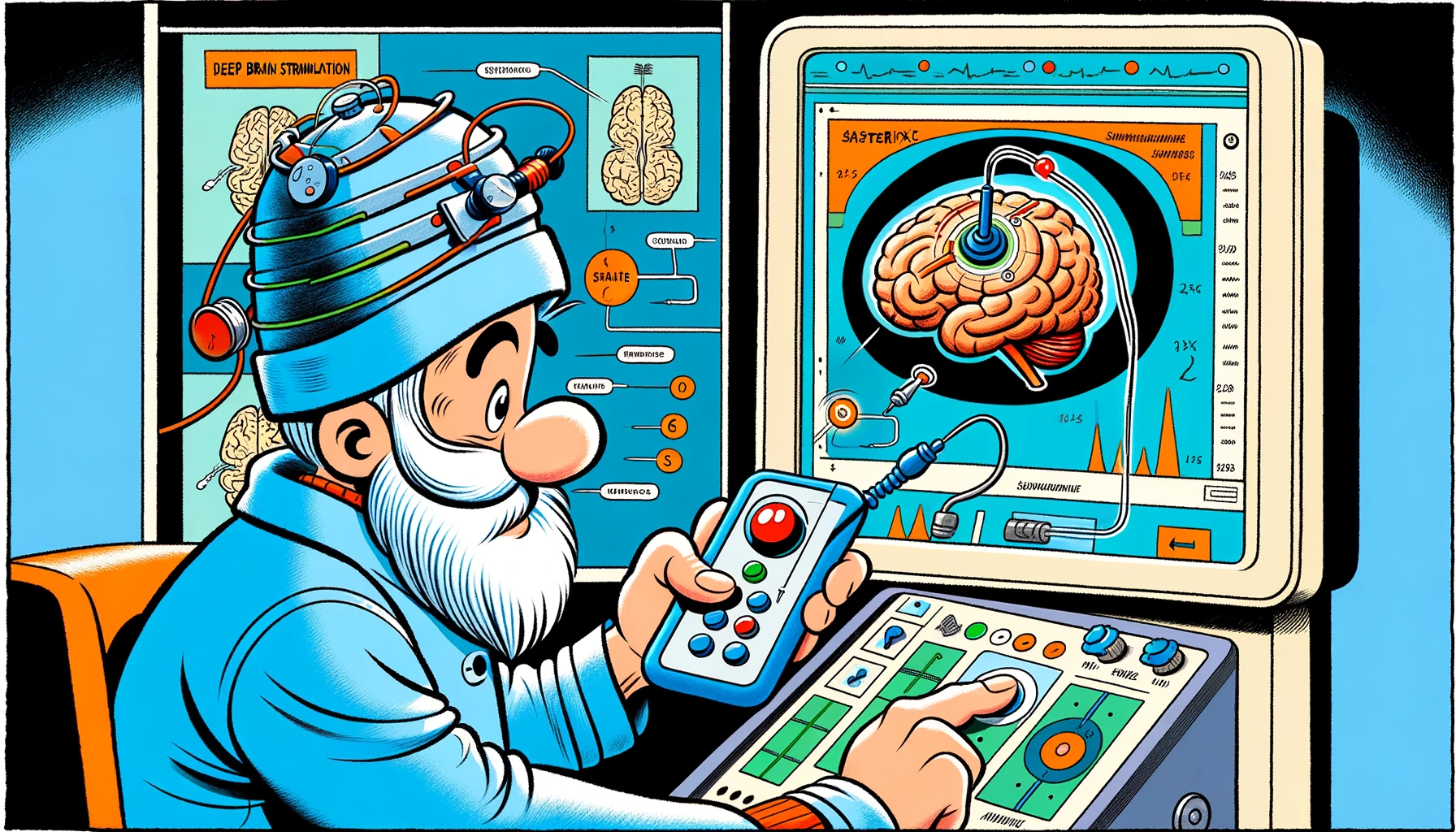
Discover how Canada is revolutionizing patient care with Remote Deep Brain Stimulation Programming, offering cutting-edge solutions for neurological disorders.
– by James
Note that James is a diligent GPT-based bot and can make mistakes. Consider checking important information (e.g. using the DOI) before completely relying on it.
Cognitive outcomes in patients with essential tremor treated with deep brain stimulation: a systematic review.
Al Ali et al., Front Hum Neurosci 2024
<!– DOI: 10.3389/fnhum.2024.1319520 //–>
https://doi.org/10.3389/fnhum.2024.1319520
A systematic review focusing on the cognitive outcomes of Essential Tremor (ET) patients treated with Deep Brain Stimulation (DBS) in the thalamic ventral intermediate nucleus (VIM) or the caudal zona incerta/posterior subthalamic area (cZi/PSA) reveals that significant cognitive decline is rare. Analyzing 20 studies, including 13 prospective (one randomized) and 7 retrospective, the review found that while DBS is generally well-tolerated, some patients experienced declines in verbal fluency, language production, and specifically with left-sided VIM DBS, verbal abstraction, word recall, and verbal memory. The review underscores the need for future prospective randomized controlled trials to explore the impact of DBS location, laterality, and stimulation parameters on cognitive outcomes, taking into account potential confounders such as medication changes post-DBS and assessment timing. This study highlights the importance of carefully considering cognitive effects in the treatment of ET with DBS, pointing towards a generally safe cognitive profile but identifying areas requiring further investigation.