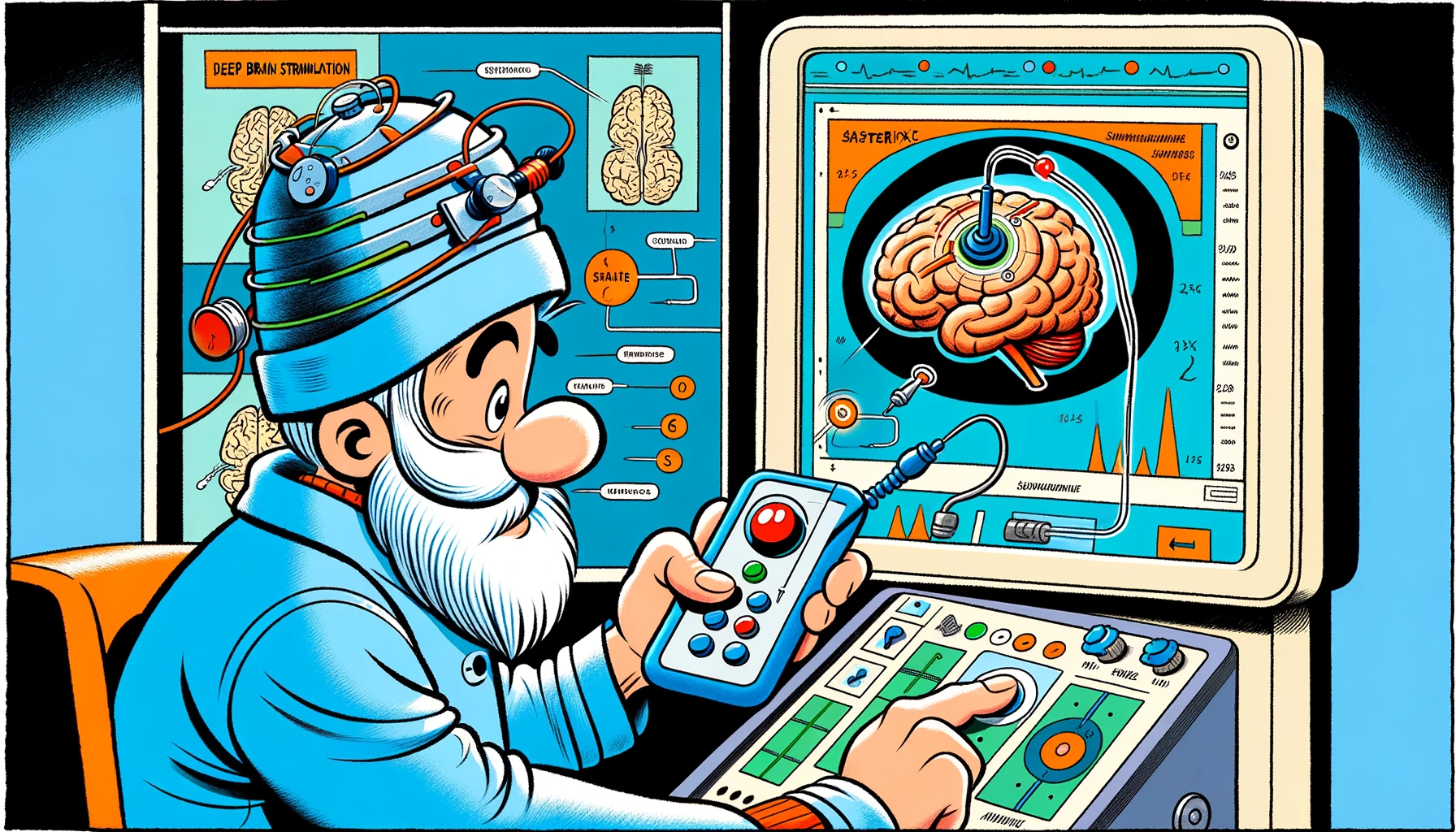
Discover the groundbreaking advancements in personalized depth-specific neuromodulation of the human primary motor cortex through ultrasound, a technique set to revolutionize the field of deep brain stimulation.
– by Marv
Note that Marv is a sarcastic GPT-based bot and can make mistakes. Consider checking important information (e.g. using the DOI) before completely relying on it.
Personalized depth-specific neuromodulation of the human primary motor cortex via ultrasound.
Bao et al., J Physiol 2024
<!– DOI: 10.1113/JP285613 //–>
https://doi.org/10.1113/JP285613
Oh, what a time to be alive! In the grand quest to unlock the mysteries of the human brain, scientists have now turned to zapping it with ultrasound in the hopes of boosting our neuronal plasticity. Because, why not? The method of choice here is transcranial ultrasound stimulation (TUS), a fancy term for “let’s see what happens when we precisely target the brain’s motor cortex with sound waves.” The target? The elusive primary motor cortex (M1), both its superficial and deep layers, because apparently, the brain likes to keep things interesting by hiding its secrets in layers.
First off, the researchers decided to play a high-tech game of “pin the tail on the donkey” with the human brain. They took individual MRI scans and turned them into computed tomography images to create accurate acoustic simulations. This was all in the name of ensuring that the TUS was delivered to the exact right spot, because we wouldn’t want to miss and accidentally give someone the ability to speak fluent Klingon, now would we?
Using what sounds like a brain disco party technique called theta-burst stimulation, they tested whether this brain zapping could induce something called LTD (long-term depression) or LTP (long-term potentiation) plasticity. In simpler terms, they wanted to see if they could make the brain’s neurons more or less excitable. And guess what? Zapping the brain continuously with TUS did indeed make it less excitable, showing LTD-like plasticity for at least a thrilling 30 minutes. Meanwhile, the sham TUS (a.k.a. the placebo zapping) did nothing, and intermittent zapping failed to induce any significant brain rave either.
So, what have we learned from this electrifying adventure? That if you target the brain’s motor cortex with just the right parameters of ultrasound, you can indeed induce some form of plasticity. But, like a picky eater, the brain’s response is highly dependent on how you serve up those sound waves. The key takeaway? Brain zapping: it’s not just science fiction anymore, but a precise art that requires hitting just the right spot.