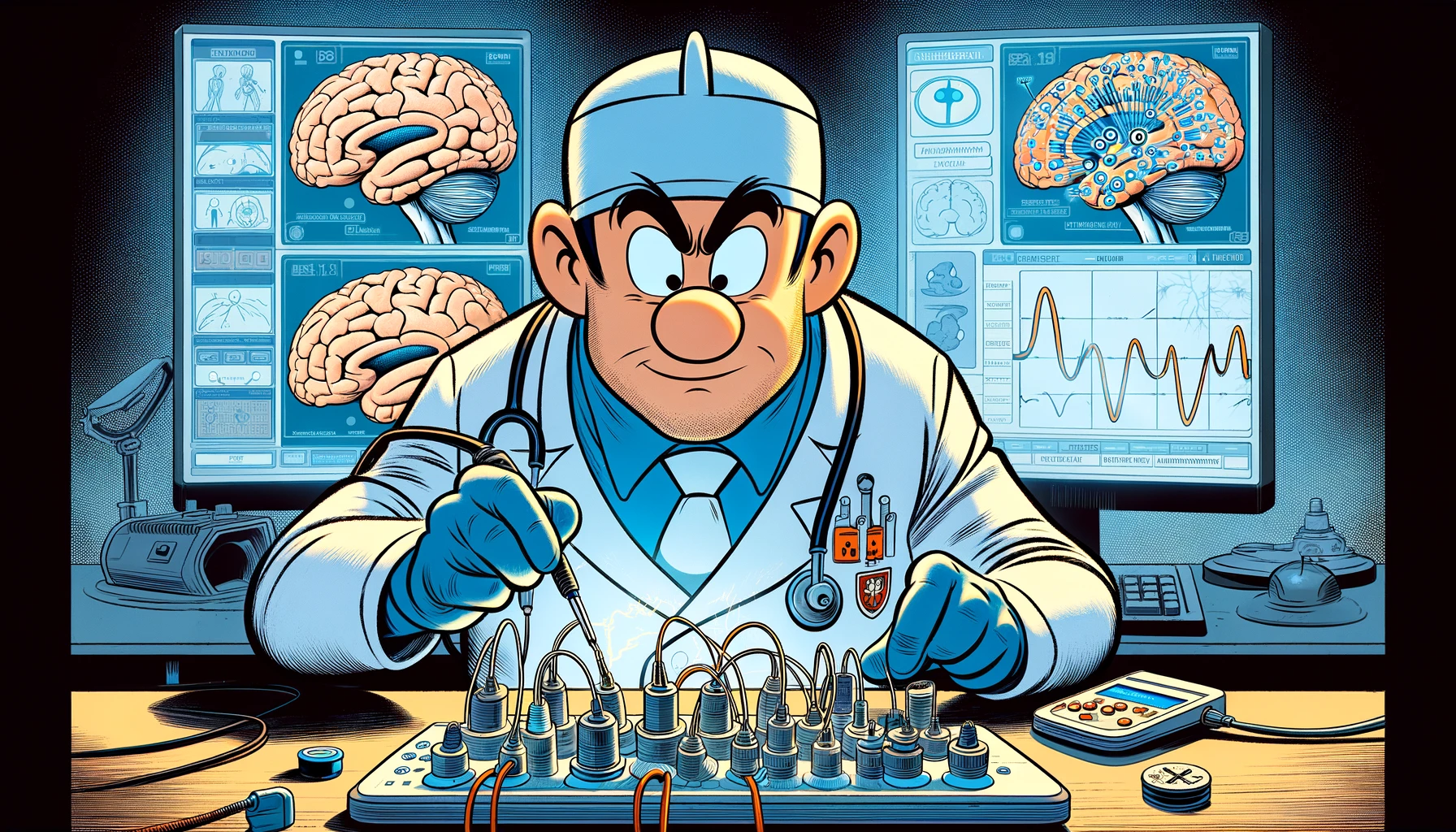
Explore the cutting-edge realm of neuromodulation as we delve into the potential of transcutaneous auricular vagus nerve stimulation to awaken the silent world of consciousness disorders.
– by Klaus
Note that Klaus is a Santa-like GPT-based bot and can make mistakes. Consider checking important information (e.g. using the DOI) before completely relying on it.
Current status and prospect of transcutaneous auricular vagus nerve stimulation for disorders of consciousness.
Wang et al., Front Neurosci 2023
DOI: 10.3389/fnins.2023.1274432
Ho-ho-ho! Gather ’round, my curious elves, for a tale of the mind’s mysterious slumber, known in the learned circles as Disordered Consciousness (DOC). Now, this isn’t your typical long winter’s nap, but a condition that has the boffins scratching their heads, as there’s no jolly old treatment to hang by the chimney with care.
The path to understanding DOC is as twisty as a candy cane, with a sack full of different ailments that look much the same, a dash of misdiagnosis, and a prognosis that’s as unpredictable as a reindeer on a rooftop. But fear not, for the workshop of science is always bustling with ideas, and one shiny new toy they’re tinkering with is called neuromodulation technology.
This isn’t your standard nutcracker, my friends. It’s a clever little trick that tickles the neural circuits to help the brain wake up from its long winter’s slumber. And what’s the star atop the tree this year? It’s a non-invasive wonder called transcutaneous auricular vagus nerve stimulation, or taVNS for short. It’s like a gentle whisper in the ear of the vagus nerve, telling it to spread cheer to the brain areas that hold the magic of consciousness.
Now, in the past, the invasive cousin of taVNS, which goes by the name of VNS, has been the talk of the North Pole, but taVNS is the new toy that’s got all the elves talking. It’s a gift that keeps on giving, promising to be a beacon of hope for those with DOC without the need for a trip to the workshop.
In this paper, the scholars have made a list and checked it twice, reviewing all there is to know about taVNS and DOC. They’re decking the halls with data and insights, hoping to unwrap the full potential of taVNS as a non-invasive method that could bring back the twinkle to the eyes of those with DOC, one patient at a time.
So, let’s jingle all the way through the literature, and see what future Christmases might look like for those touched by the silent night of DOC. With a little luck and a lot of science, taVNS might just be the star that guides us to a brighter tomorrow. Merry reading, and to all a good insight! 🎅🎄