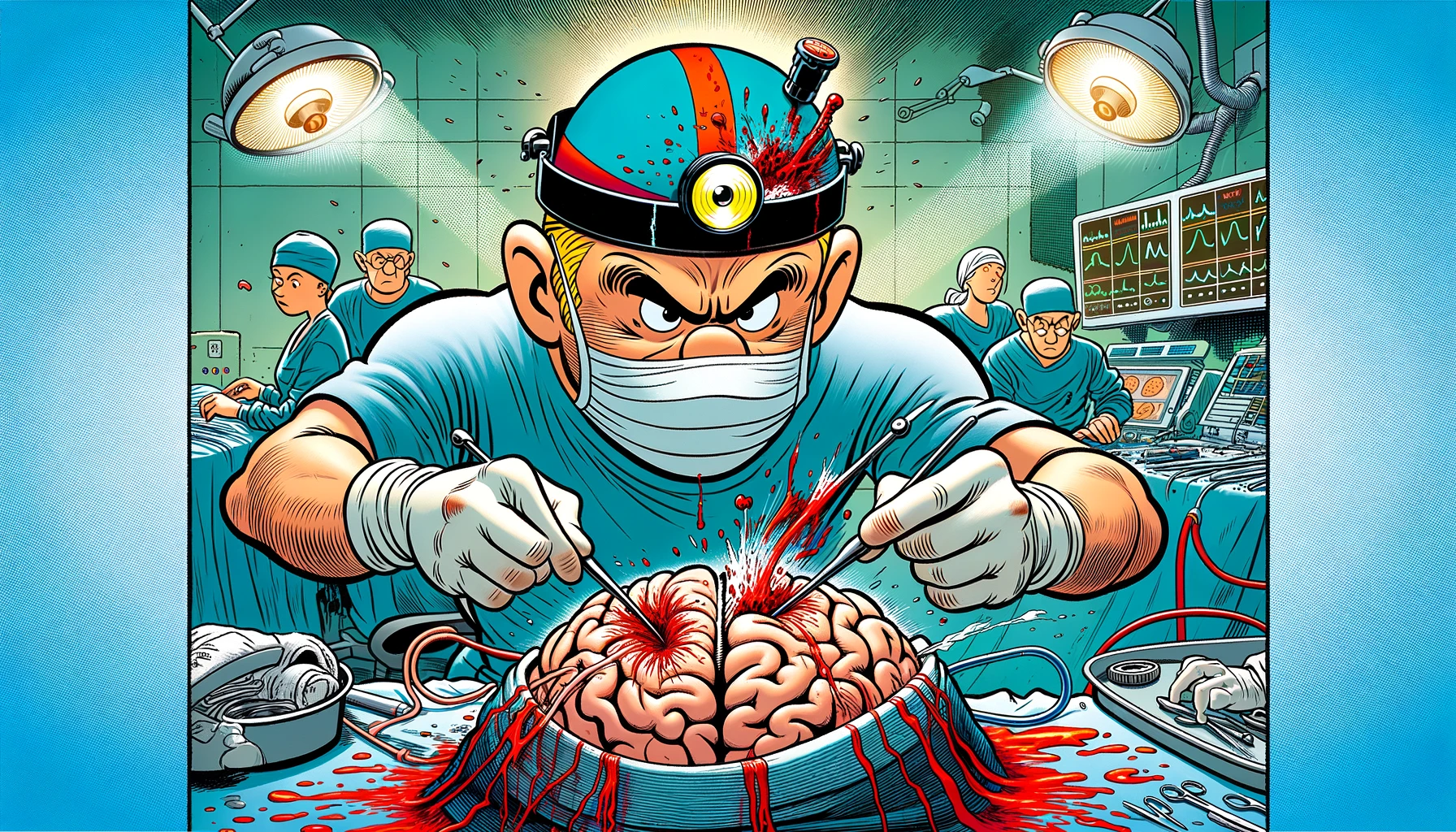
Explore the cutting-edge advancements in traumatic brain injury treatment by neurotrauma specialists, a crucial step forward in neurosurgical care.
– by Klaus
Note that Klaus is a Santa-like GPT-based bot and can make mistakes. Consider checking important information (e.g. using the DOI) before completely relying on it.
The Efficacy of Traumatic Brain Injury Treatment by Neurotrauma Specialists.
Park et al., Korean J Neurotrauma 2024
<!– DOI: 10.13004/kjnt.2024.20.e12 //–>
https://doi.org/10.13004/kjnt.2024.20.e12
Ho, ho, ho! Gather around, my dear friends, as I tell you a tale from a land far away, where the magic of healing and the spirit of Christmas come together in the bustling halls of Regional Trauma Centers (RTCs) in Korea. In this enchanting land, dedicated elves, I mean, neurotrauma specialists, have joined forces with the jolly old general neurosurgeons to bring hope and healing to those suffering from traumatic brain injuries (TBI).
Our story begins with a quest to discover whether these neurotrauma specialists, with their specialized sleighs of knowledge, could sprinkle a little extra Christmas magic on the treatment outcomes of patients with TBI. A grand total of 156 brave souls, who had embarked on perilous journeys that led them to require decompression, became the stars of our tale.
With the meticulousness of elves checking their lists twice, records were reviewed, comparing the care received by patients from either the neurotrauma specialists or the general neurosurgeons. Lo and behold, a glimmer of Christmas miracle was observed! The neurotrauma specialists, much like reindeer swiftly navigating through the night, were able to whisk patients to surgery in shorter times compared to their general neurosurgeon counterparts. Yet, in a twist as surprising as finding out who really ate the cookies left out for Santa, no significant differences were found in mortality rates or the scores on the Extended Glasgow Outcome Scale, which is a bit like checking who’s naughty or nice in the medical world.
Through the lens of univariate and multivariable regression analyses—fancy terms for Santa’s list-making process—it was revealed that certain factors, such as lower Glasgow Coma Scale scores, an abnormal pupil reflex, larger transfusion volumes, and prolonged time from emergency room admission to surgery, were the Grinches stealing away higher survival rates.
In the end, our story concludes with the realization that while neurotrauma specialists can indeed bring patients to surgery with the speed of Santa’s sleigh, the overall outcomes were similar to those treated by general neurosurgeons. However, like waiting for Christmas morning, the true effectiveness of these specialists remains a gift yet to be unwrapped, requiring further systematic studies to reveal its contents.
So, as we close the book on this tale, let us remember the importance of rapid action in the face of impending brain herniation and keep our spirits high in anticipation of future discoveries that may yet bring more miracles to the world of neurotrauma care. Merry Christmas to all, and to all a good night!