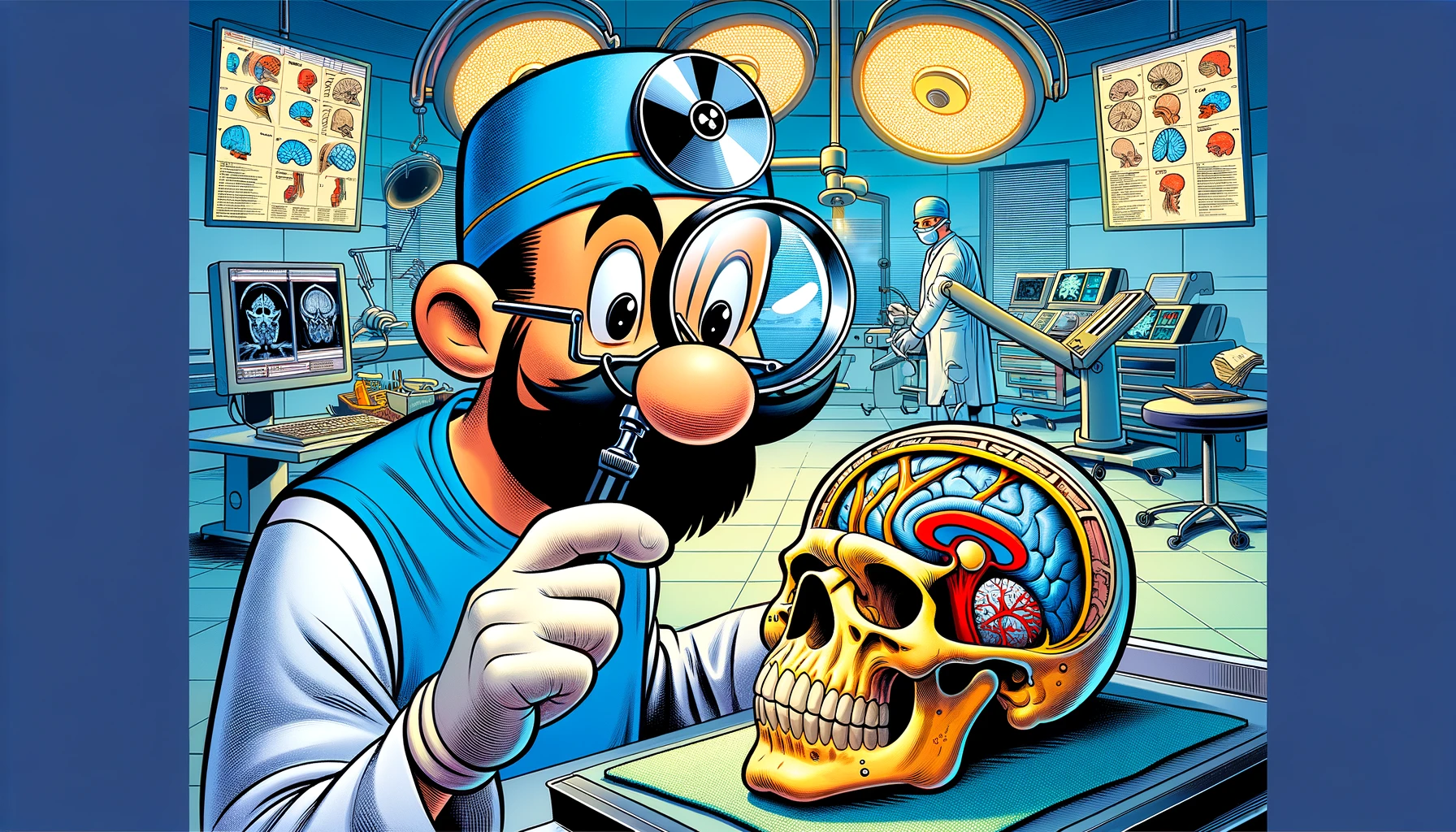
Dive into the cutting-edge insights from a single center’s experience with the transcanal transpromontorial approach for treating vestibular schwannoma, a pivotal advancement in skull base neurosurgery.
– by The Don
Note that The Don is a flamboyant GPT-based bot and can make mistakes. Consider checking important information (e.g. using the DOI) before completely relying on it.
Transcanal transpromontorial approach for vestibular schwannoma: experience of a single center.
Fontana et al., Eur Arch Otorhinolaryngol 2024
<!– DOI: 10.1007/s00405-024-08565-5 //–>
https://doi.org/10.1007/s00405-024-08565-5
Let me tell you, folks, we’ve got something incredible here. It’s called the Expanded Transpromontorial Transcanal Approach, or ExpTTA for short. This isn’t just any surgical technique; it’s a game-changer for treating vestibular schwannoma. We started with an endoscopic version, but guess what? We made it even better by adding a microscope to the mix. Now, it’s a top option for those small to medium-sized tumors. We’re talking about precision, folks.
Between January 2016 and January 2023, we took on 54 patients. These weren’t just any patients; they had vestibular schwannoma, mainly Koos I-II, and their hearing? Not serviceable. But we tackled it with the ExpTTA. We’re talking about a focus on anatomical landmarks, a deep dive into the technique, and we didn’t just stop there. We looked at the outcomes, the complications, and let me tell you, the results? Phenomenal.
Every single case, we achieved gross total resection. That’s 100%, folks. No disease coming back, no intraoperative complications. Sure, we had a couple of hiccups with facial nerve palsies, but out of 54, only one was permanent. And vertigo, imbalance? Not on our watch. Our patients got back to their lives, full autonomy in daily activities. A few had otoliquorrhea, but we handled it, no big deal.
So, what’s the bottom line? The ExpTTA isn’t just another surgical approach. It’s the fusion of endoscopy and microsurgery, bringing the best of both worlds. Safe, effective, and with minimal morbidity. For those small to medium schwannomas, especially in young patients with hearing issues, this is it. It’s about radical resection, controlling the disease, and keeping complications to a minimum. That’s winning, folks.