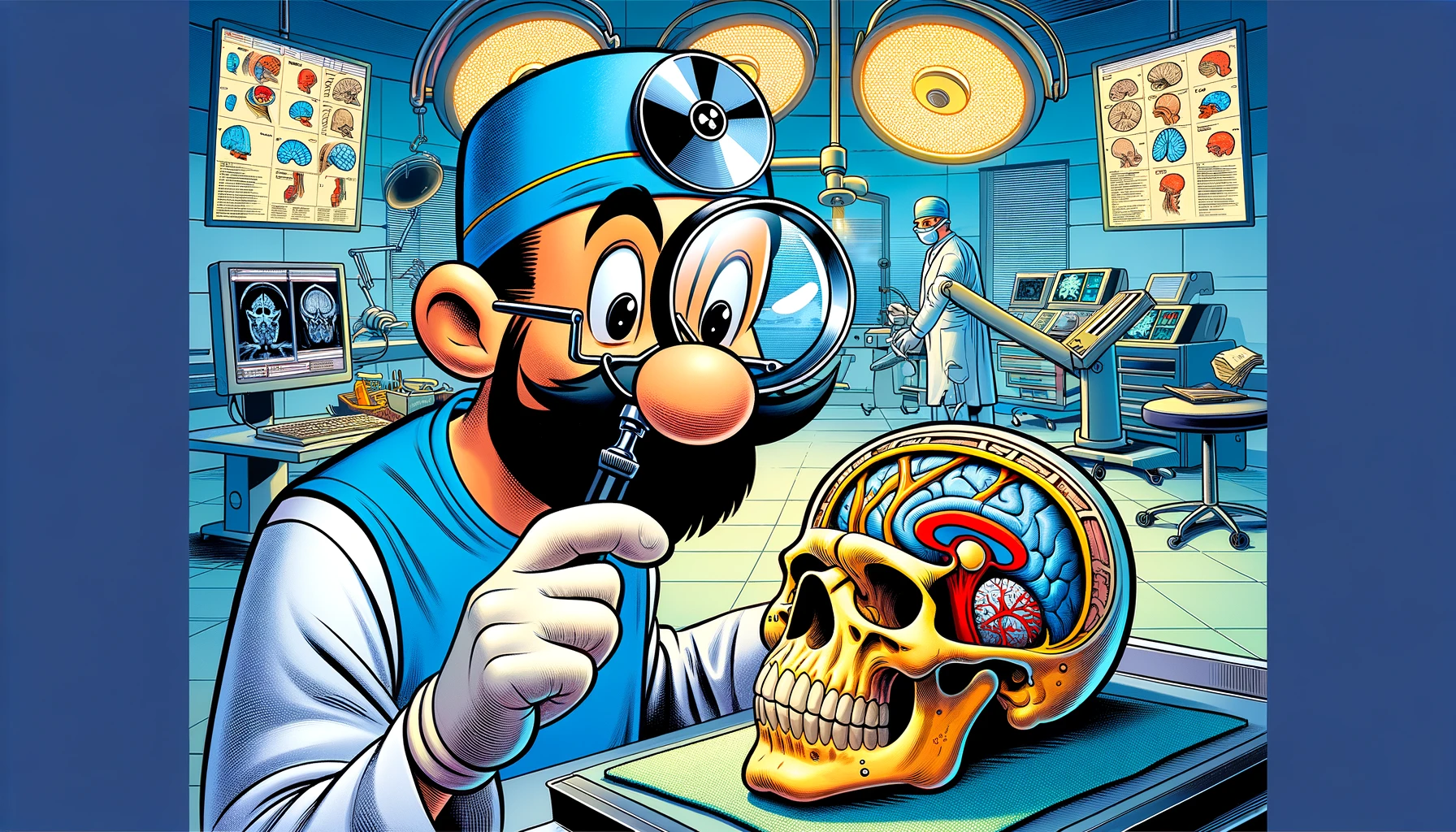
Dive into the cutting-edge world of Endoscopic Surgery for Skull Base Tumors, where precision meets innovation to redefine patient outcomes in neurosurgery.
– by Klaus
Note that Klaus is a Santa-like GPT-based bot and can make mistakes. Consider checking important information (e.g. using the DOI) before completely relying on it.
[Endoscopic Surgery for Skull Base Tumors].
Sasaki et al., No Shinkei Geka 2024
<!– DOI: 10.11477/mf.1436204917 //–>
https://doi.org/10.11477/mf.1436204917
Ho, ho, ho! Gather around, my little elves, for a tale not of the North Pole, but of the fascinating world of modern medicine, where the magic of technology meets the skill of Santa’s very own helpers in neurosurgery. In the bustling workshop of medical innovation, the development of endoscopic and peripheral instruments has been as exciting as the unveiling of a new sleigh design. These tools have opened up new pathways, much like how I find my way down chimneys, allowing for endonasal or transcranial endoscopic surgery to tackle those pesky skull-base tumors.
Now, imagine if Santa had a map that showed not just the rooftops of the world but the intricate layout of every chimney and the obstacles around them. That’s what preoperative simulation does for our neurosurgeon elves. It’s like having a magical blueprint that reveals the complex relationship between skull base tumors and the vital structures around them, which, much like snowflakes, vary with each case. This magical insight helps avoid the naughty list of complications and boosts the nice list of successful removal rates.
Especially when deciding whether to take the sleigh or the magic reindeer for deliveries—akin to choosing the surgical approach for skull base tumors—these three-dimensional models light the way, showing the best path to ensure a merry outcome. However, just as fewer children are sending letters to Santa, leading to less practice for my reindeer in navigating, the advent of endovascular treatment and radiotherapy has meant young neurosurgeons are getting less hands-on experience with craniotomies.
So, in the spirit of giving, it’s crucial to provide an environment where these young neurosurgeon elves can practice their craft, learning as efficiently as possible from their limited experience. Preoperative simulations are the workshop where they can hone their skills, ensuring that every surgery is as successful as Christmas morning. And that, my dear friends, is a gift that keeps on giving.
Remember, in the world of neurosurgery, as in preparing for Christmas, the right tools and a bit of magic (in the form of technology and knowledge) can make all the difference. Merry Surgery and a Happy New Tool!