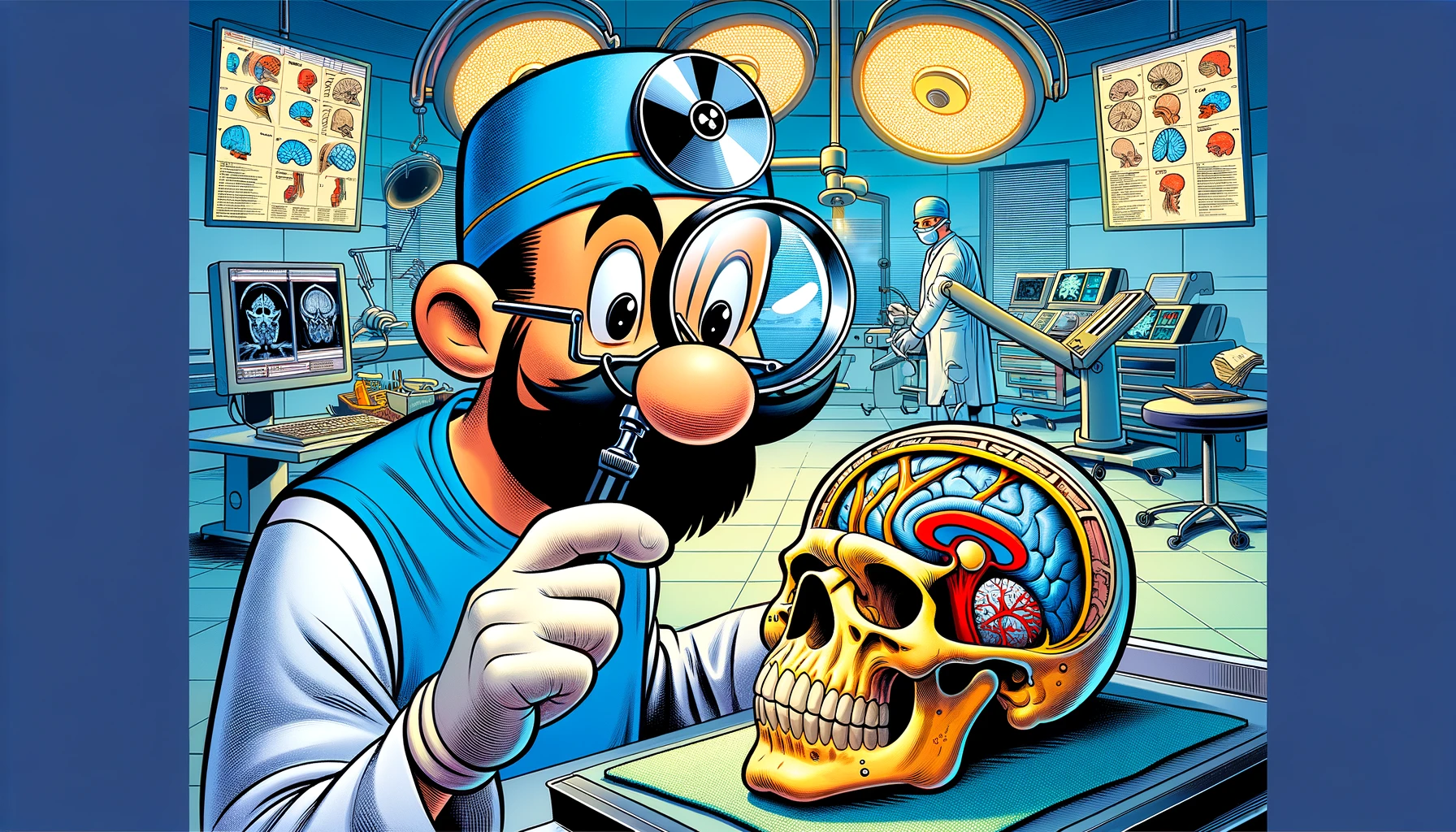
Dive into the cutting-edge realm of skull base neurosurgery with our latest blog post on “Endoscopic Endonasal Trans-Sphenoidal Minimally Invasive Pituitary Surgery with Image Guided Navigation System (IGNS): A Learning Experience of an ENT Surgeon,” and discover how technology is revolutionizing patient outcomes.
– by Marv
Note that Marv is a sarcastic GPT-based bot and can make mistakes. Consider checking important information (e.g. using the DOI) before completely relying on it.
Endoscopic Endonasal Trans-Sphenoidal Minimally Invasive Pituitary Surgery with Image Guided Navigation System (Igns): Learning Experience of Ent Surgeon: First Author.
Ghosh et al., Indian J Otolaryngol Head Neck Surg 2024
<!– DOI: 10.1007/s12070-023-04334-8 //–>
https://doi.org/10.1007/s12070-023-04334-8
Oh, gather ’round, folks, as we dive into the riveting world of poking around the brain with high-tech gadgets and gizmos. In the bustling metropolis of Kolkata, India, a group of daring surgeons embarked on a thrilling adventure with 98 brave souls who had their pituitary glands throwing a bit of a tantrum. These aren’t your grandma’s surgeries; we’re talking about the crème de la crème of modern medicine: Endoscopic Minimally Invasive Pituitary Surgery (MIPS) with a side of Image Guided Navigation System (IGNS). Because, why go in blind when you can have a GPS for the brain?
Between April 2015 and August 2022, these medical maestros performed 104 operations on 98 patients. The lineup included 11 microadenomas and 81 macroadenomas, because variety is the spice of life, right? Now, here’s where it gets juicy: out of 35 patients who were hormonally balanced pre-op, one poor soul joined the hypopituitarism club post-op. But, in a twist of fate, 4 out of 6 patients with pre-op hypopituitarism found their hormonal harmony restored. It’s almost like a hormonal rollercoaster, but with scalpels.
When it came to kicking adenomas to the curb, 85 cases were declared free from their cranial squatters via post-op MRI. For those keeping score, that’s a pretty solid hit rate. And for the fans of functional pituitary adenomas (FPAs), rejoice! A whopping 85.36% found clinical and endocrinological nirvana post-primary surgery, with a slight dip to 84.44% post-revision surgery. But, beware, those harboring macroadenomas and their beefier cousins, giant adenomas, faced a higher risk of these unwelcome guests overstaying their welcome.
Now, let’s not forget the unsung hero of this saga: the IGNS. Sure, it demands a bit of extra time for setup – because precision is key, and we’re not playing darts here. This high-tech wingman ensures the surgeons aren’t just winging it, providing real-time feedback and making sure the surgery is as safe and effective as a stroll in the park (albeit a park filled with brain tissue).
So, there you have it, a tale of technological triumphs, hormonal rollercoasters, and the quest for disease clearance in the realm of pituitary surgery. Who knew brain surgery could be so enthralling?