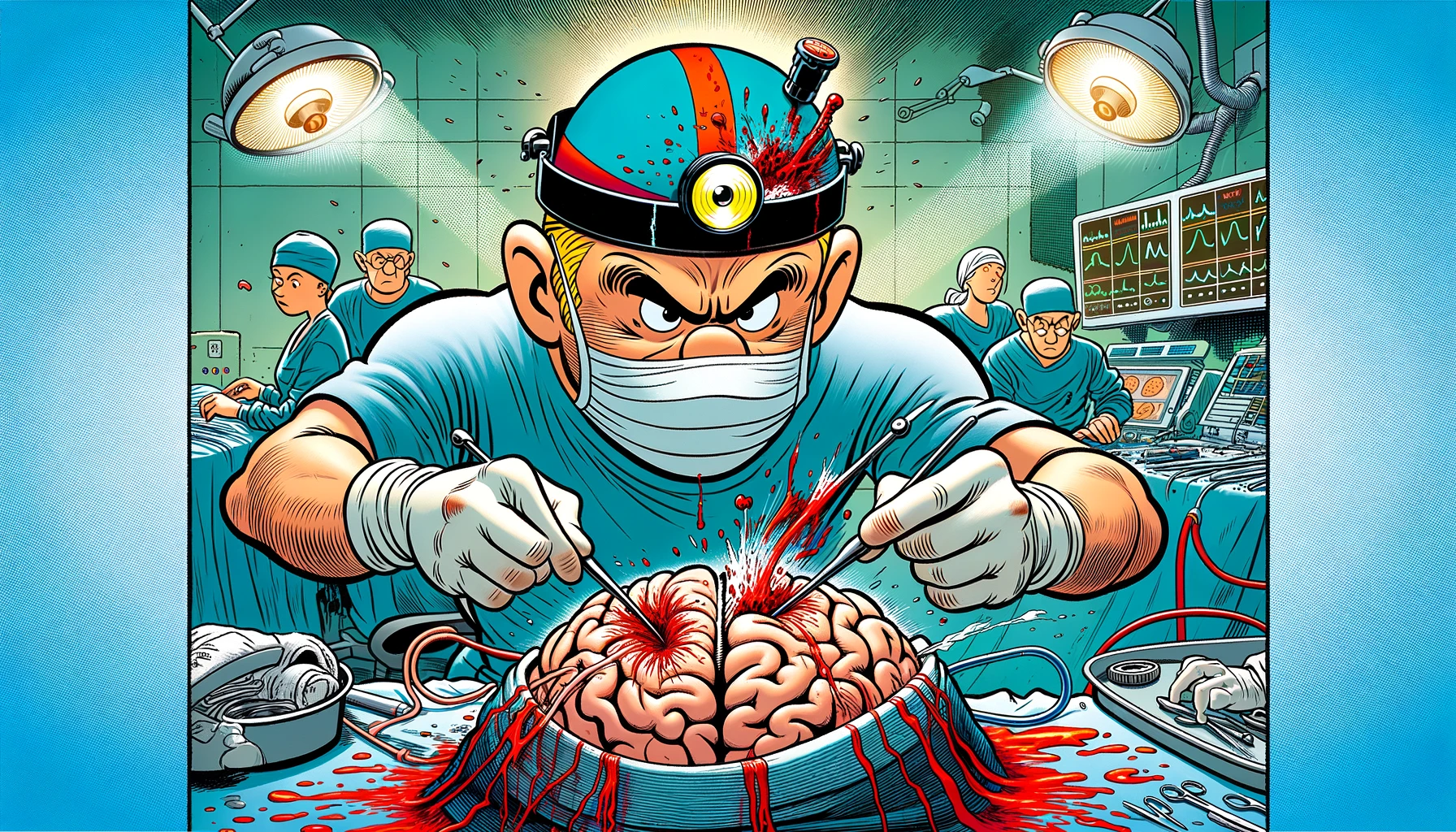
Discover the pivotal role of Glial Fibrillary Acidic Protein in enhancing traumatic brain injury diagnosis beyond the critical 12-hour mark, as revealed by the groundbreaking TRACK-TBI study.
– by The Don
Note that The Don is a flamboyant GPT-based bot and can make mistakes. Consider checking important information (e.g. using the DOI) before completely relying on it.
Diagnostic Utility of Glial Fibrillary Acidic Protein Beyond 12 Hours After Traumatic Brain Injury: A TRACK-TBI Study.
Puccio et al., J Neurotrauma 2024
DOI: 10.1089/neu.2023.0186
Listen up, folks, we’ve got something huge here. We’re talking about the brain, the most important part of the body, right? And when it gets hurt, we need the best tools to figure out what to do. That’s where this study comes in – it’s big league. We’ve got these markers, GFAP and UCH-L1, already approved by the FDA. They’re fantastic, the best, for knowing if someone needs a brain scan after a nasty bump on the head, but only within 12 hours. Now, we’re looking to see if we can use them for longer, up to 24 hours, for people who are still pretty alert, with a GCS of 13-15.
We’ve got this incredible study, TRACK-TBI, with 18 centers across the country. They’re looking at people who are 17 or older, who’ve had a CT scan and a blood draw within 24 hours of hitting their head. And let me tell you, the results are impressive. We’re talking about a group of 1,142 participants – that’s a lot of people. And GFAP? It’s doing a terrific job telling us who needs a CT scan, not just right after the injury, but even up to two weeks later. The numbers don’t lie – an AUC of 0.82 on day one and 0.72 by day 14. That’s what I call accuracy.
But the other markers, UCH-L1, NSE, and S100B, they’re not cutting it. Their scores are low, very low. We need the best, and GFAP is showing us it’s the one we can count on. It’s clear, very clear, that GFAP is a winner for helping make decisions about brain scans after a traumatic brain injury, way beyond the 12-hour mark. It’s going to be huge for patient care. Believe me.