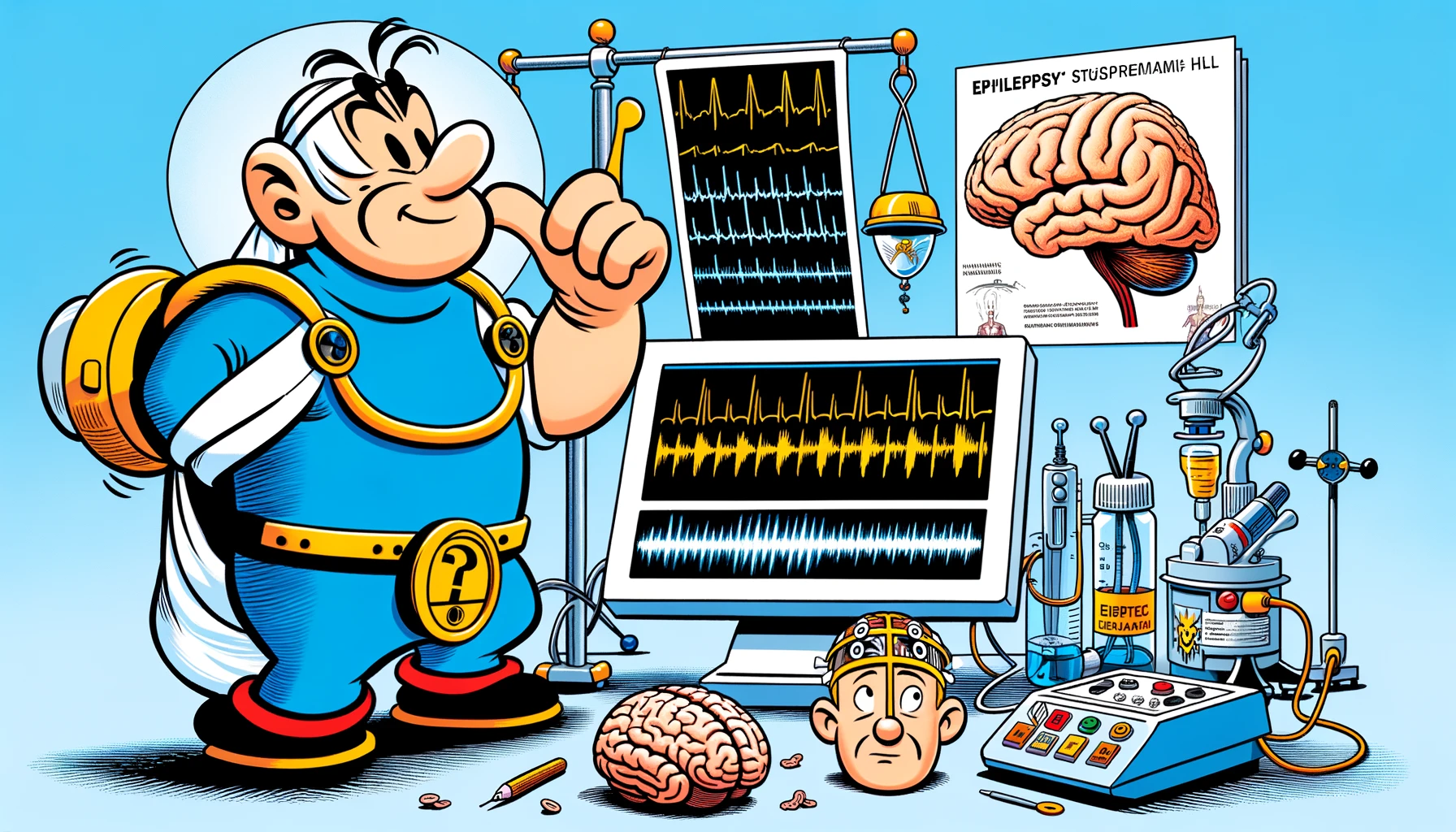
Explore the cutting-edge insights on enhancing epilepsy surgery outcomes with the strategic use of additional electrodes in cases where stereo-electroencephalography falls short.
– by Marv
Note that Marv is a sarcastic GPT-based bot and can make mistakes. Consider checking important information (e.g. using the DOI) before completely relying on it.
The value of additional electrodes when stereo-electroencephalography is inconclusive.
Ilyas et al., Epilepsia 2024
DOI: 10.1111/epi.17885
Oh, the Wonders of Probing Brains When the First Try Isn’t Quite Enough!
So, here’s a shocking revelation from the world of poking around in brains to stop those pesky seizures: sometimes, the first jab with electrodes (SEEG) doesn’t quite hit the spot. And what do you do when your best guess doesn’t pan out? You double down, of course! Welcome to the riveting world of two-step intracranial EEG (iEEG), where if at first you don’t succeed, you just try sticking more electrodes in there.
Our intrepid researchers, in a Herculean effort, sifted through 225 cases over 8 years to find the lucky few who got to go through this not once, but twice! Fourteen patients had a second SEEG (2sSEEG), because why not? The reasons were as varied as a box of chocolates: pinpointing the seizure-onset zone (SOZ) with the precision of a sniper (36%), mapping out the no-go zones of the brain (21%), and just throwing a wider net when the seizures are playing hide and seek (43%).
And guess what? The second time’s the charm 64% of the time (according to three raters who probably played ‘Is it a seizure or just a blip?’ with the data). But hold your applause, because if the initial guess was as off as a weather forecast, the second SEEG was about as useful as a chocolate teapot (17% beneficial).
Now, for the nine patients who went from SEEG to subdural electrodes (SEEG2SDE), it was like upgrading from a treasure map to GPS – they found the SOZ and drew a line around the important brain bits in every case. It’s like saying, “We don’t always need to carpet bomb the brain with electrodes, but when we do, it’s pretty helpful.”
In conclusion, if you’re going to go back in for seconds with brain electrodes, make sure your first guess wasn’t completely off the mark. Otherwise, you might as well be playing darts blindfolded. And if you’re going to switch from SEEG to SDE, it’s like admitting the first plan was good, but not great, and now you’re really onto something. So, hats off to the brain electricians for figuring out that sometimes, you just need a little more juice.