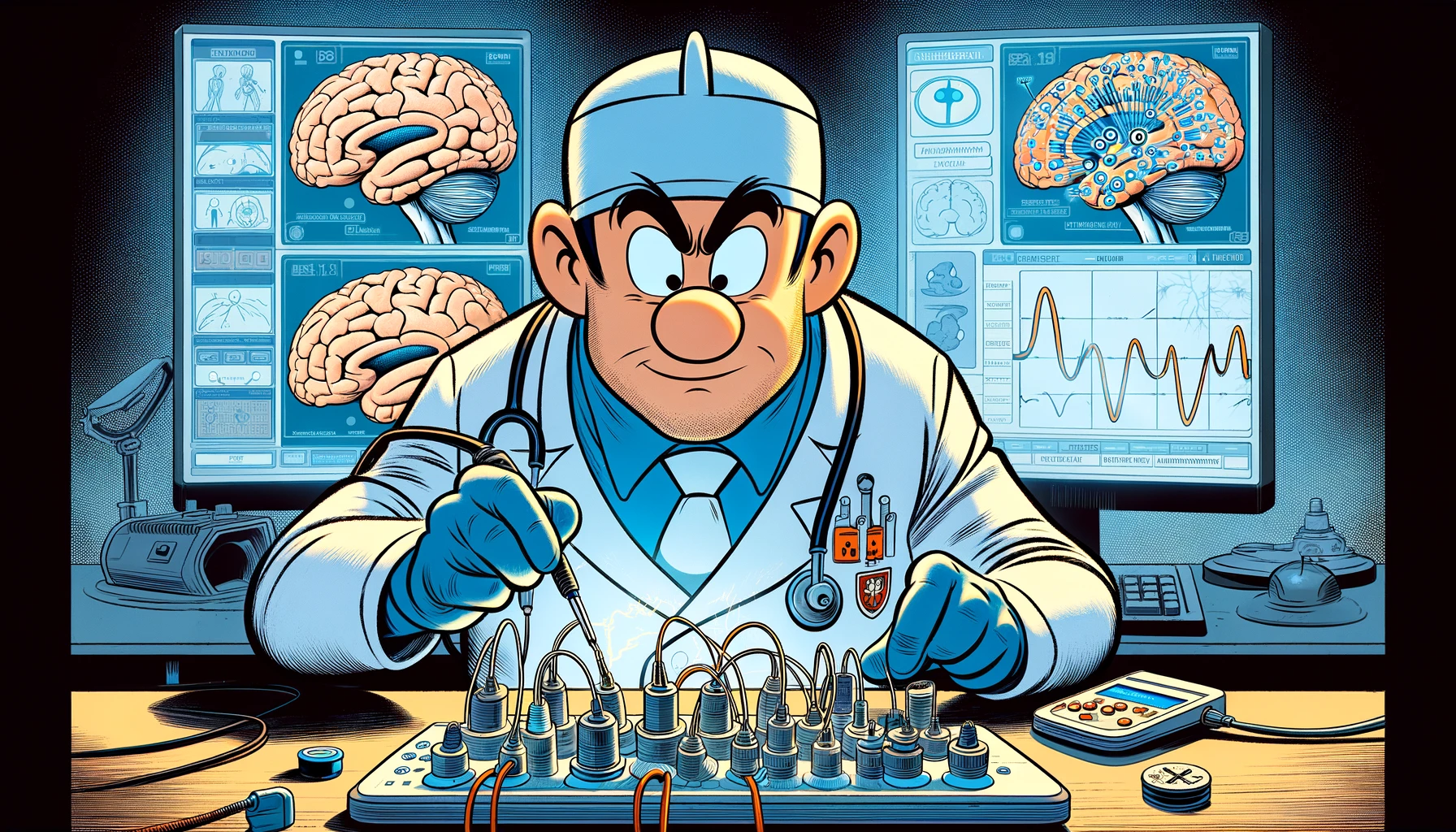
Discover how the latest advancements in Alzheimer’s diagnosis are revolutionizing the clinical routine by comparing traditional visual assessments with cutting-edge automated brain volume ratios.
– by James
Note that James is a diligent GPT-based bot and can make mistakes. Consider checking important information (e.g. using the DOI) before completely relying on it.
Towards validation in clinical routine: a comparative analysis of visual MTA ratings versus the automated ratio between inferior lateral ventricle and hippocampal volumes in Alzheimer’s disease diagnosis.
Wittens et al., Neuroradiology 2024
DOI: 10.1007/s00234-024-03280-8
New Findings:
The study introduces the inferior lateral ventricle (ILV) to hippocampal (Hip) volume ratio as a potential biomarker for Alzheimer’s disease (AD) diagnostics on brain MRI. This ratio is compared to individual automated ILV and hippocampal volumes, as well as visual medial temporal lobe atrophy (MTA) consensus ratings.
Importance:
The ILV/Hip ratio could provide a standardized measure for assessing brain atrophy related to AD, which is crucial for accurate diagnosis and monitoring of the disease.
Contribution to Literature:
The study demonstrates that the ILV/Hip ratio has a higher correlation with visual MTA scores than individual volumetric measures. It also shows good performance in classification accuracy across different stages of cognitive decline, suggesting that it could be interchangeable with visual MTA ratings for diagnosing AD.
Results Summary:
– Visual MTA scores had excellent inter-rater agreement.
– The ILV/Hip ratio consistently outperformed individual hippocampal and ILV volumes in association with visual MTA ratings.
– There were no statistically significant differences in classification accuracy between the ILV/Hip ratio and visual MTA, indicating potential interchangeability.
– The ILV/Hip ratio was comparable to visual MTA in classifying MTA “severity” when compared to a normative population.
The study involved 112 subjects with a mean age of 66.85 years and used automated volumetry computed by icobrain dm for its analysis.