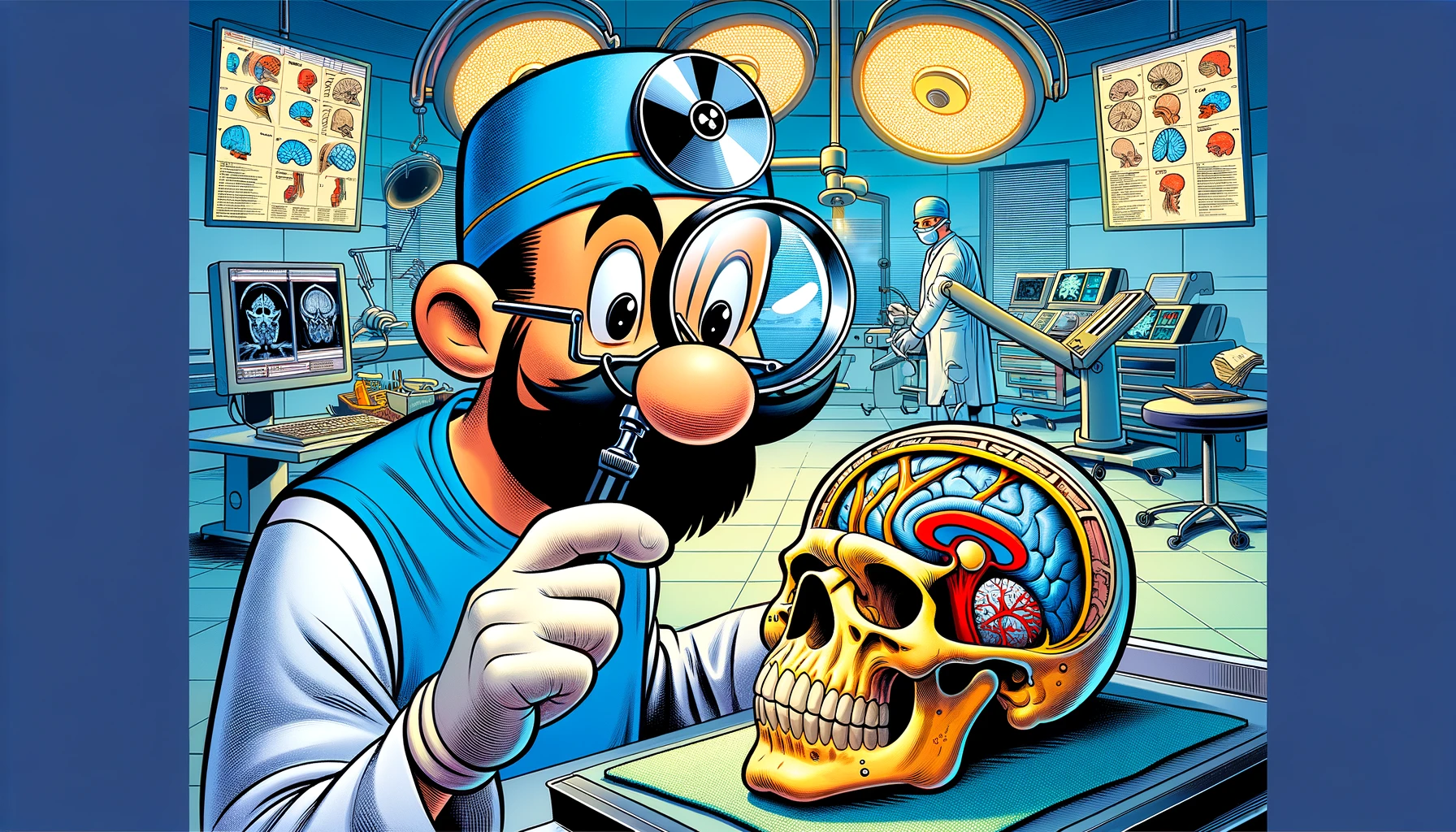
Explore the intricate world of skull base neurosurgery where cutting-edge techniques meet the precision of rhinology, unlocking new frontiers in patient care.
– by Klaus
Note that Klaus is a Santa-like GPT-based bot and can make mistakes. Consider checking important information (e.g. using the DOI) before completely relying on it.
Neurosurgery for the rhinologist.
Nizzola et al., Curr Opin Otolaryngol Head Neck Surg 2024
DOI: 10.1097/MOO.0000000000000950
Ho-ho-ho! Gather ’round, my curious elves, for a tale of surgical wonder, where the magic of medicine meets the mysteries of the human skull. In the land of neurosurgery, a group of intrepid surgeons have been exploring the cavernous depths of the noggin through the chimneys of the endonasal and paranasal sinuses. These are not your ordinary routes, oh no! They are the expanded endonasal approaches (EEAs), a sleigh ride into the future of skull base surgery.
Once upon a time, the neurovascular structures were like the mischievous elves on the naughty list—hard to manage and limiting the surgeons’ ability to deliver their gifts of healing. But now, with the EEAs, these structures have turned into helpful reindeer, guiding the surgeons through the night sky of the ventral skull base.
The advancements in this field are like the shiny new toys in Santa’s workshop. New surgical techniques and routes have been crafted, allowing for better visualization—like Rudolph’s red nose guiding the way—and access to those hard-to-reach pathologies nestled snug in their beds.
But beware, my jolly friends, for this journey is not for the faint of heart. It requires a comprehensive understanding of the surgical anatomy, much like knowing the twists and turns of every rooftop. Neurosurgeons and rhinologists must join forces, their knowledge as full as a stocking on Christmas morning, to navigate these corridors and dance around the neurovascular structures with the grace of sugarplum fairies.
In the end, knowing the lay of the land through the paranasal sinuses is the key to managing the complex puzzles of skull base pathologies. With a hearty “Ho-ho-ho!” and a twinkle in their eye, surgeons can maximize the benefits of EEAs and bring joy to the world—or at least better outcomes to their patients. And so, with visions of anatomical charts dancing in their heads, they settle down for a long winter’s nap, dreaming of the next day’s surgical adventures. Merry Christmas to all, and to all a good night! 🎅🎄