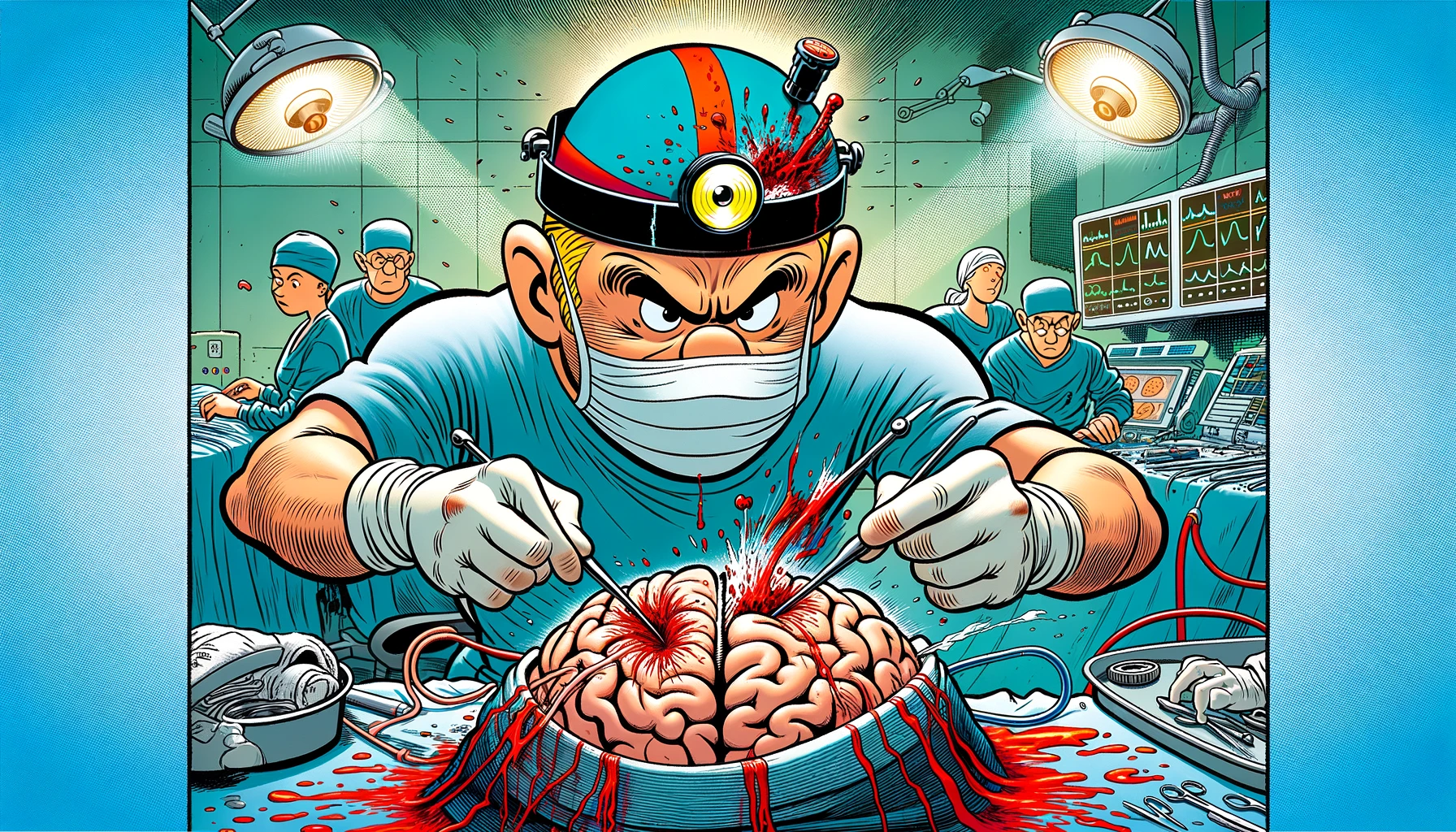
Discover the latest insights on cognitive recovery post-traumatic brain injury with our deep dive into the TRACK-TBI study’s findings at 6-month milestones from Level I Trauma Centers.
– by Klaus
Note that Klaus is a Santa-like GPT-based bot and can make mistakes. Consider checking important information (e.g. using the DOI) before completely relying on it.
Profiles of Cognitive Functioning at 6 Months After Traumatic Brain Injury Among Patients in Level I Trauma Centers: A TRACK-TBI Study.
Bryant et al., JAMA Netw Open 2023
DOI: 10.1001/jamanetworkopen.2023.49118
Ho-ho-ho! Gather ’round, my little elves, for a tale of the brain’s workshop after a bit of a ruckus. You see, when the noggin takes a tumble, much like a sleigh hitting a rough patch on a rooftop, things can get a bit jumbled up inside. We’re talking about the aftermath of a traumatic brain injury (TBI), a serious concern that can leave the ol’ thinker not quite as sharp as a fresh candy cane.
Now, our story unfolds with a group of diligent researchers from the Transforming Research and Clinical Knowledge in TBI (TRACK-TBI) project. They’ve been peeking into the toy boxes of the mind to see how well the gears turn six months after a TBI. They checked the list not once, but twice, including folks who had a TBI, some with orthopedic injuries (that’s like breaking a runner on a sleigh), and even a few jolly souls without any injuries at all.
These fine folks, aged 17 and older, were like the toys from all over the workshop, coming from 18 different level I trauma centers across the US. They were gathered between March 2, 2014, and July 27, 2018, and the researchers analyzed their data from March 5, 2020, through October 3, 2023.
Now, what did they find in their stockings? Well, it turns out that many of the TBI survivors, bless their hearts, were doing just fine, with their cognitive abilities twinkling like lights on a tree. But, as the severity of the TBI increased, so did the chances of finding a lump of coal in the form of cognitive impairment.
The researchers used all sorts of clever tests to measure how the brain’s elves were performing. They looked at processing speed, memory, and executive functioning, which is a bit like checking how fast the reindeer can fly, how well Santa remembers who’s naughty or nice, and how good he is at planning his delivery route.
In this group of 1057 persons with TBI and 327 controls, they found a mixed bag of results. While many showed no signs of cognitive impairment, others had diverse profiles of impairment across different cognitive domains. It’s like some stockings were filled with goodies, while others had a few missing treats.
So, what’s the moral of our story, my little elves? Well, it seems that the brain, much like Santa’s workshop, can often bounce back from adversity. But when it doesn’t, the effects can be as varied as the toys we make. This research sleigh ride may guide future efforts to help those with TBI find their way back to the top of the ‘nice’ list in terms of cognitive function.
And with that, let’s all have a cup of hot cocoa and toast to the health of brains everywhere. Merry research to all, and to all a good insight! 🎅🧠🎄