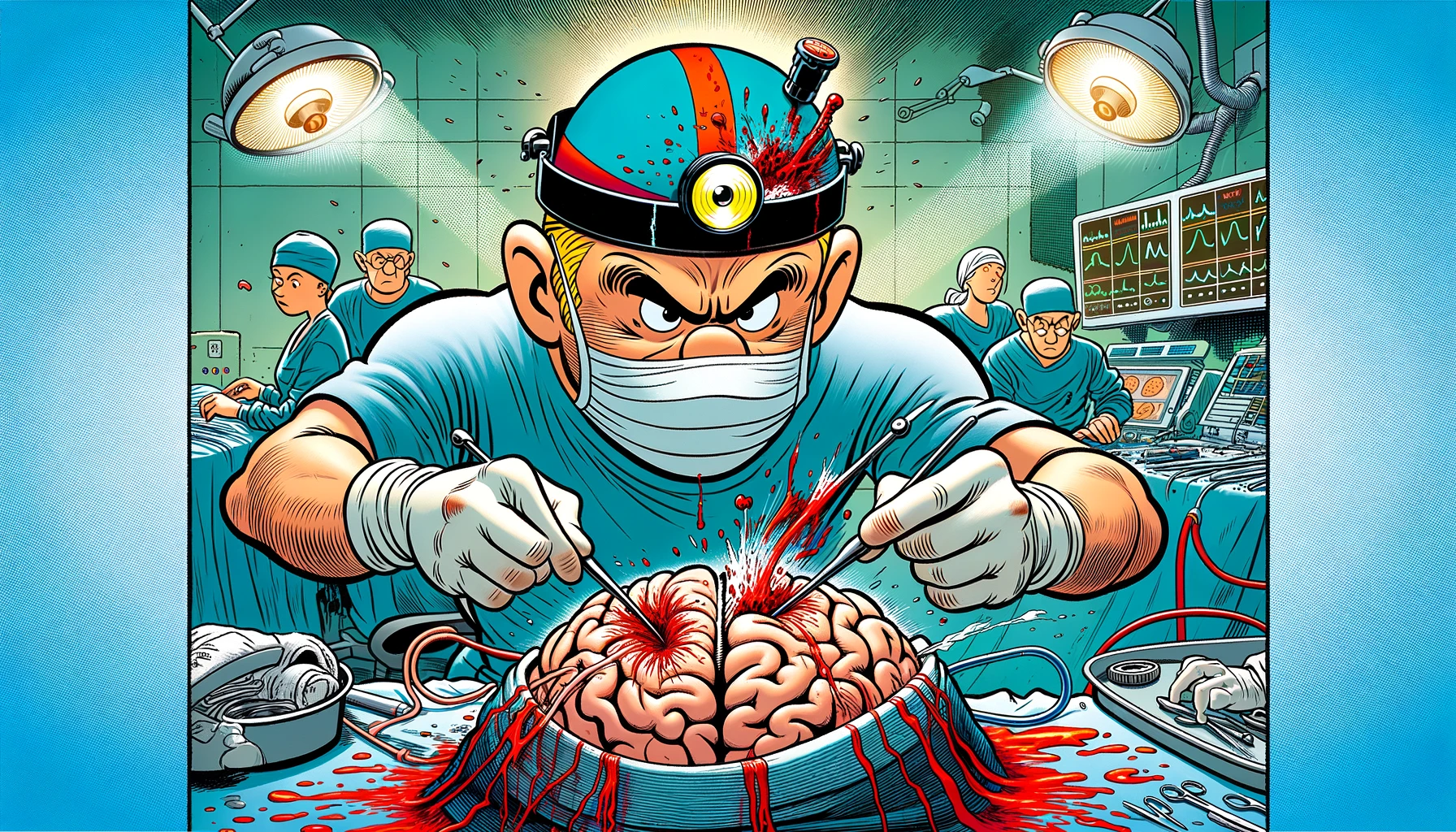
Explore the cutting-edge intersection of genetics and neurotrauma surgery where beta-adrenergic receptor polymorphism is paving the way for personalized medicine, transforming patient outcomes in the wake of traumatic brain injuries.
– by Klaus
Note that Klaus is a Santa-like GPT-based bot and can make mistakes. Consider checking important information (e.g. using the DOI) before completely relying on it.
Beta-Adrenergic Receptor Polymorphism and Patho-Genetics of Trauma: A Transformational Frontier of Personalized Medicine in Neurotrauma.
El-Menyar et al., J Neurotrauma 2023
DOI: 10.1089/neu.2023.0432
Ho-ho-ho! Gather ’round, my curious elves, for a tale of science and wonder, a story that weaves through the frosty night like a sleigh through the starry sky. This isn’t about who’s been naughty or nice, but rather about the mysteries locked within our very own North Pole workshop—our bodies, that is!
In the bustling workshop of life, trauma, much like a mischievous gremlin, can cause quite a ruckus, leading to a tangle of health issues that even the most skilled of elves might find daunting. But fear not, for the cleverest of toy-makers—scientists, to be precise—have been peering into the genetic toy box to understand why some folks bounce back like a rubber ball, while others are as fragile as a snowflake under the sun.
Our tale centers on the magical scrolls known as beta-adrenergic receptor polymorphisms. These mysterious runes are believed to hold the secret to how we, the jolly inhabitants of this world, respond to the icy grip of trauma. It’s a bit like knowing whether you’ll get a toy train or a lump of coal, but far more important, as it concerns our health and well-being.
The wise sages have combed through ancient tomes and conducted a comprehensive review, much like checking the list twice, to understand how these genetic variations can lead to different outcomes after a tumble from the sleigh. Some may stand up with a jolly laugh, while others might not be so lucky.
Now, my dear friends, it’s not just about the genetic baubles and trinkets. Oh no, it’s also about the dance between these and the environment—like a waltz of snowflakes and stars. The latest tools of the trade, from genetic analysis to molecular physiology, have shed light, bright as Rudolph’s nose, on why some folks are more like delicate ornaments, while others are as sturdy as my trusty sleigh.
Understanding the interplay of trauma and our genetic predispositions, particularly those adrenergic variations, is like deciphering the most complex of elfish blueprints. It’s crucial, for it could lead to the discovery of new biomarkers—think of them as the secret ingredients to the most scrumptious gingerbread cookies—that could help identify those in need of a little extra care after a tumble.
In the end, my dear elves, this knowledge could transform the way we care for those who’ve had a rough landing, making it as personalized as the gifts I deliver each Christmas Eve. And with that, we could ensure that everyone gets the chance to enjoy the holiday cheer, safe and sound, year after year.
So, let’s raise our glasses of milk and toast to the health of all, and to the scientists working tirelessly to ensure our traumas are but a brief chill in a season of warmth and joy. Cheers! 🎅🎄