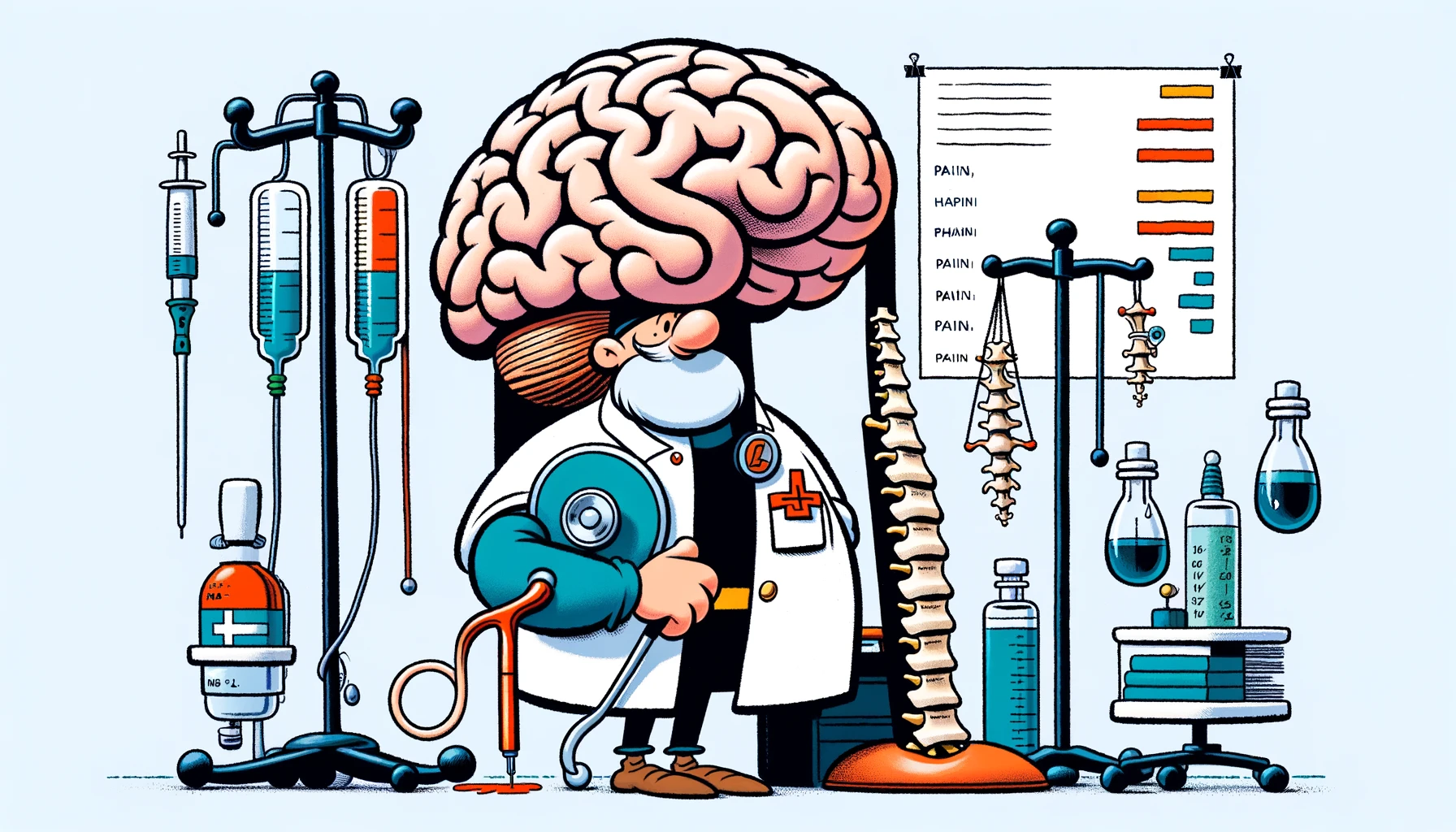
Discover the groundbreaking insights into back pain treatment as we delve into the latest research on notochord-derived cell subpopulations in the spine, unveiled through cutting-edge single cell RNA sequencing.
– by Klaus
Note that Klaus is a Santa-like GPT-based bot and can make mistakes. Consider checking important information (e.g. using the DOI) before completely relying on it.
Single cell RNA sequencing reveals emergent notochord-derived cell subpopulations in the postnatal nucleus pulposus.
Zhang et al., FASEB J 2024
DOI: 10.1096/fj.202301217R
Ho-ho-ho! Gather ’round, my little elves, for a tale of the spine’s own North Pole, where the intervertebral disc, much like our workshop, is a hub of activity and merriment. But alas, not all is jolly, for disc degeneration is the Grinch that steals the comfort and joy of many, leading to chronic low back pain that could make even Rudolph’s nose lose its shine.
In our story, the central nucleus pulposus (NP), akin to the heart of Christmas, is in need of some serious cheer. You see, it’s made of cells as unique as the snowflakes that grace the winter sky, originating from the notochord, a structure as magical in development as the star atop the Christmas tree.
Our intrepid scientists, much like the elves in their quest for the perfect toy, used a spell called single-cell RNA sequencing to peek into the bustling life of these NP cells in postnatal mice. And what did they find? A workshop of diversity! There were progenitor cells, the little helpers full of potential, and mature NP cells, the seasoned toymakers, churning out extracellular matrix (ECM) gifts like aggrecan and collagens, the very stuff that keeps the disc plump and cushiony.
These mature cells, marked by a badge as shiny as a bauble, called Cd9, were found frolicking at the NP’s edge, growing in number as the days until Christmas, and creating a glycosaminoglycan-rich matrix that would make any Christmas tree green with envy.
But, oh dear, in a goat model, much like the sleigh we use for our Christmas deliveries, it was discovered that these Cd9+ cells dwindled when the disc degeneration turned naughty. This suggests that these cells are the unsung heroes, the secret Santas, if you will, maintaining the NP’s ECM, the very twinkle in the disc’s eye.
So, with visions of regenerative strategies dancing in their heads, our scientists believe that understanding these cells and their ECM-depositing ways could lead to a future as bright as the star of Bethlehem, banishing low back pain to the Island of Misfit Toys. And with that, my dear friends, may your spines stay merry and bright, and may all your Christmases be free of back pain. Ho-ho-ho! 🎅🎄