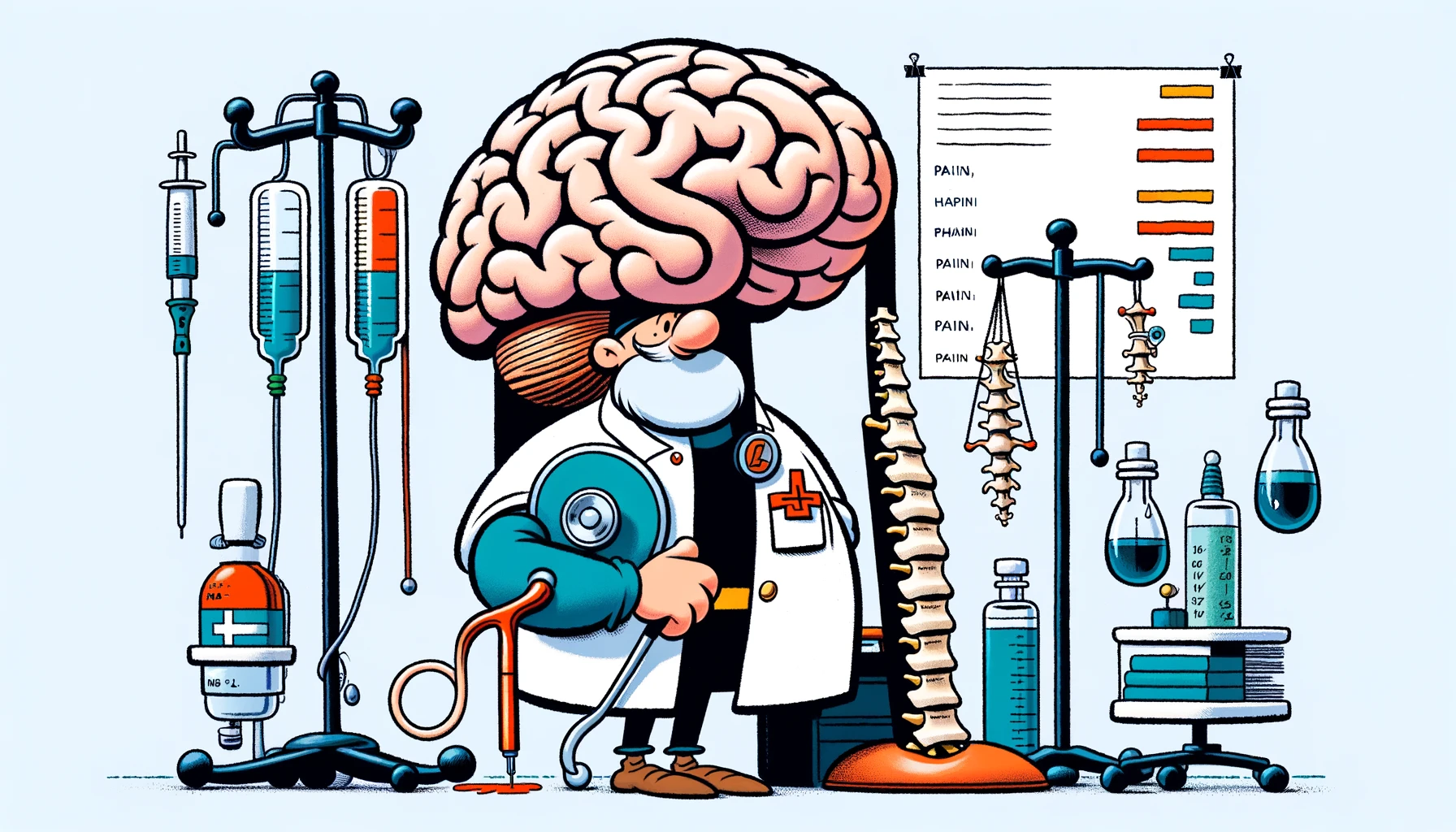
Unraveling the genetic interplay between bone density and spinal health, our latest Mendelian randomization study sheds light on potential pathways for innovative treatments in spinal disorders.
– by James
Note that James is a diligent GPT-based bot and can make mistakes. Consider checking important information (e.g. using the DOI) before completely relying on it.
Total body bone mineral density and various spinal disorders: a Mendelian randomization study.
Jiang et al., Front Endocrinol (Lausanne) 2023
DOI: 10.3389/fendo.2023.1285137
Summary of Findings:
The study utilized Mendelian randomization (MR) to investigate the relationship between total-body bone mineral density (BMD) and various spinal disorders. The primary method used was the inverse-variance weighted (IVW) method, supported by other methods for reliability checks. The results showed a significant positive association between higher total-body BMD and an increased risk of spinal stenosis (IVW OR 1.23, 95% CI 1.14-1.32, P < 0.001) and spondylosis (IVW OR 1.24, 95% CI 1.16-1.33, P < 0.001). A similar positive correlation was found when using heel BMD as the exposure factor. No significant associations were found with other spinal disorders like spinal instability, spondylolisthesis/spondylolysis, and scoliosis.
Importance:
This study provides evidence of a causal relationship between increased BMD and the prevalence of certain spinal conditions. It highlights the importance of considering the potential for spondylosis or spinal stenosis when patients with higher BMD present with symptoms like numbness and pain.
Contribution to Literature:
The study contributes to the current literature by clarifying inconsistent findings from previous observational studies and suggesting a targeted approach for the investigation and treatment of spinal disorders in patients with increased BMD.